Categorías
Bookkeeping

What Is Retail Accounting? Retail Method + Calculator

In simple terms, retail accounting helps you to track the value of items you have in stock based on product price and the number of sales. Retail accounting software simplifies inventory management by calculating the value of stock based on retail prices. This makes it easier to handle large inventories without detailed cost tracking. This approach helps prevent stockouts during big sales and avoids excess inventory that doesn’t sell.

Simplified Inventory Tracking

  • Since the retail inventory method is just an estimation technique, expect that there will be differences in the physical count and retail method estimations.
  • It saves time by automating tasks, freeing up your team to focus on clients.
  • For example, considering you can buy each water bottler for $10 and first bought 200 of them, your initial inventory cost is $2,000.
  • For example, ready-to-use noodles, cushions, and exercise mats have been introduced to expand representation in the relevant areas.
  • Custom retail accounting software may be a better solution than out-of-the-box tools when your business needs specific features or our business operations have a unique flow.
  • This allows the retailer to quickly arrive at an approximate value of inventory, without having to take a physical count or match cost to items still on hand.

Custom retail accounting software may be a better solution than out-of-the-box tools when your business needs specific features or our business operations have a unique flow. For example, you need to handle your crypto assets but popular tools on the market don’t offer crypto accounting. In this article, we discuss what retail accounting is and how businesses manage their inventory. We’ll also dive deep into accounting software for retail accounting to help you stay tuned to the best practices. Investing in inventory management software can transform how you track your inventory. For instance, a medium-sized electronics store might use HashMicro’s Inventory Management Software to automate inventory tracking.

Examples of Retail Accounting Software

Because you assume prices are the same, retail accounting is easy to calculate and can lower your expenses without needing to close the store for inventory counts or pay staff to do it for you. Your balance sheet lists what you own (assets), what you owe (liabilities), and what’s left over (owner’s equity) at a given point in time. At its most basic, retail accounting counts the cost of inventory relative to the selling price. In an uncertain economic climate, it’s important to understand all the accounting options at your disposal.

What Is the Retail Method?

  • However, you have chosen to use a keystone markup strategy, so you know you have a 50% markup on all items, regardless of what they are.
  • As well as managerial accounting which helps you understand your business’s operations.
  • Accounting programs often assist with accuracy and can be a good way to organize your financial information.
  • To help illustrate the above retail accounting approaches, let’s look at an example.
  • Yes, it’s possible to migrate existing data to a new accounting system.
  • The in-store cafeteria meal was in the “over-represented” restaurants and cafes class.

Knowing inventory key metrics allows businesses to forecast demand and replenish stock timely, plan purchases, track product shortage, manage suppliers, and adjust pricing strategies. Using the specific identification method, the cost of that specific ring would be tracked individually in your inventory records until it’s sold. That’s why modern, high-tech accounting software like HashMicro is essential.

Conducting frequent audits also helps identify outdated or damaged stock early, so you can take proactive measures such as listing markdowns on an item or anticipating returns before losses accumulate. Developing a retail accounting solution requires thorough analysis and planning. Retail accounting software may differ in the setup process and have a limited list of features, however, the user experience is straightforward for most of them. Every retail transaction, whether it involves sales, purchases, or expenses, needs to be accurately recorded.

  • Whether you’re new to the concept or looking to refine your current practices, this guide will walk you through everything you need to know about retail accounting.
  • Most modern solutions will integrate with your POS system for coordinated inventory and cost tracking.
  • A major drawback of this method is that, because you don’t have a POS system automatically tracking your sales, you don’t have an easy way to determine what items were sold, stolen or broken.
  • Depending on the type of inventory you sell, you may be able to use the simpler retail method to calculate the cost of goods sold and the cost of your ending inventory.
  • Regularly counting your inventory and comparing it to your records is a tried-and-true method for spotting discrepancies.

Complete frequent, partial stock checks to maintain up-to-date records. This reduces the need for a full-scale inventory audit that would disrupt operations. It can alert you of discrepancies, so you can quickly investigate and remedy stock variations and head off potentially costly inventory count errors. Customers love a discount, and managing discounts effectively can prevent excess inventory and maintain profit margins.

How do I keep track of the inventory on hand?

This is especially true if you’re dealing with multiple warehouses or other inventory that may be spread across store locations. Store inventory management software can help map out stock locations, improving your order-processing times and warehouse efficiency. Having a unified inventory database allows for easy tracking and efficient stock management. Maintain a centralized system to reduce stock inconsistencies and achieve accuracy across multiple sales channels. This can mean big-time savings, especially if your business has multiple locations or sells products across various channels. The retail method is easy to use when you need to calculate the approximate cost of your inventory.

what is retail accounting

what is retail accounting

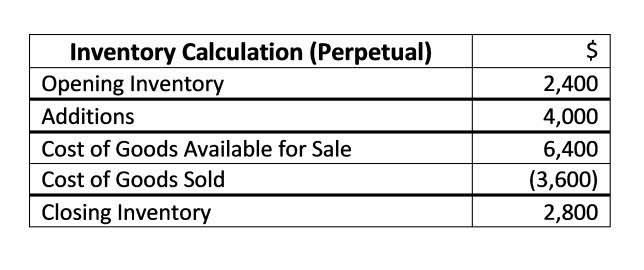
Let’s also say you have a 30 percent markup on all items, and you know that your inventory was valued at $100,000 retail accounting last quarter. In this case, if you’ve made $50,000 in sales at the end of your current quarter and purchased $5,000 of new inventory during the quarter, you can use retail accounting to determine your inventory’s value. To keep track of your revenue and profit, you must monitor the cost of the goods you sell and the dollar amount of the inventory you have left. Be sure to keep track of which method you use, as you’ll need to know this when it comes time to file your taxes. Also keep in mind that you need to stick with one accounting method for your business from year to year. Any changes in the accounting method you use must be approved through the IRS, generally by filing Form 3115.

Use inventory management software

what is retail accounting

Now let’s say you purchased an additional 5 t-shirts, and 10 hats halfway through the month. During the quarter, your sales recorded through our point of sale system reached $40,000. In addition, during this period you invested US$15,000 in replenishing your stock of fixtures and accessories. Since we’re using the average method, we don’t need to make adjustments to COGAS at Retail.


Categorías
Bookkeeping

Trade Receivables: Formula, Calculation & Examples

trade receivable

By optimizing receivables, companies can free up cash and improve liquidity. Many businesses have already transformed their financial health by adopting these strategies. Keep reading to discover the importance of trade receivables, how to calculate key metrics, and actionable tips to optimize your receivables management.

trade receivable

Is trade receivables an asset or liability?

This accuracy is crucial for effective financial management, reporting, and decision-making. When a seller sells the goods or services on credit, they have to pay for various factors, such as trade receivable raw materials, months before receiving their payment from the sale. As this causes a hindrance to their cash flow, sellers can choose to fund their trade receivables by seeking early payment in exchange for a discount. They can finance their invoices using various methods such as factoring, line of credit, invoice discounting, among others. Another way they can seek early payment is if the buyer gives them access to programs such as dynamic discounting and supply chain finance.

  • This entry decreases net income by $5,000, reflecting the anticipated loss from uncollectible receivables.
  • That’s why it’s crucial that every trade receivable is accurately recorded into your accounting books and sought after, in case of a payment delay.
  • Be specific, include the exact date on the invoice that a payment will have to be received by, to be considered “early” and to receive the discount.
  • Risk of Missed PaymentsManual tracking can lead to overdue invoices, late fees, or damaged supplier relationships.

Key examples of accounts receivable journal entries

This ensures the overdue balance and interest charge are accurately tracked. Businesses often set specific terms for late payments, such as charging 1.5% per month on overdue amounts, which can help encourage timely payments. Most businesses offer payment plans to their customers, especially for gross vs net higher-ticket items or services. Tracking these payments properly prevents confusion and helps businesses manage overdue payments, ensuring they are paid in full within the agreed time frame.

Forrester Recognizes HighRadius in The AR Invoice Automation Landscape Report, Q1 2023

trade receivable

Total credit sales (including the $6,450) will be posted from the Sales Day Book to the debit of trade receivables account and the credit of sales account – both accounts being in the General Ledger. The $6,450 will also be posted to the debit of a personal account opened for Manfredi and kept in the Receivables Ledger. Trade receivables are easy to calculate – they’re simply the total of all currently outstanding invoices sent to customers or clients. Effective monitoring and collection processes are essential for maintaining healthy cash flow and minimizing bad debts. Implementing systematic procedures ensures timely collections and reduces the risk of overdue receivables.

trade receivable

#1: What Is an Accounts Receivable Aging Schedule?

trade receivable

Either way, in the event that a vendor owes the company a refund, this amount is recorded as a non-trade receivable until the funds are Legal E-Billing exchanged. Instead, non-trade receivables represent other, non-typical income streams the company is still waiting to collect. However, non-trade receivables are not uncommon, and it’s important for businesses to understand how they differ to ensure they’re recorded and handled correctly.

  • This process follows the principle of double-entry bookkeeping, where two accounts are always affected—one debited and one credited.
  • Regular auditing of trade payables helps catch errors early, ensure completeness, and maintain financial accuracy.
  • In cases where customers make partial payments or set up payment plans, businesses need to record these transactions accurately to reflect the outstanding balance.
  • The distinction relates to whether the amount owed relates to core business activities or not.
  • Notes receivable usually involve formal agreements, which may include interest charges and specific payment schedules.
Categorías
Bookkeeping

Types of Equity Accounts List of Examples Explanations Definition

Understanding equity is crucial for stakeholders, including investors, managers, and analysts, as it influences decision-making processes and strategic planning. The specific equity accounts you will see can vary depending on the company’s structure, the type of business, the legal requirements in the country of incorporation, and other factors. All these equity accounts together represent the shareholders‘ claim against the company’s assets. Equity can be referred to as the ownership interest in the company as represented by stock or securities. In short, investors can own equity shares in the company in the form of preferred or common stock.

This equity account is normally a negative balance and is added to the accounts as a deduction from total equity. Another significant component is treasury stock, which represents shares the company has repurchased from shareholders. Companies may opt to buy back shares when management believes available equity capital cannot be effectively deployed for optimal returns.

Common Stock (Capital contributed by shareholders or issued capital)

Let us take an example; there is a company whose accounting records show assets of $120,000 and liabilities of $80,000, and the amount of owner’s equity of $40,000. Because of the cost principle, the amount of the owner’s equity should not be considered to be at fair market value. If a company’s stock price is $50 and there are 20,000 shares outstanding, the market value of equity would be $1,000,000. As the financial landscape becomes more interconnected and complex, equity accounting will continue to evolve, guided by the principles of transparency, accuracy, and relevance. The challenge for professionals in this field will be to stay ahead of these changes, embracing new technologies and methodologies to meet the demands of a rapidly changing world. As we consider the trajectory of equity accounting, it’s evident that this area of finance is poised for significant evolution.

This method involves comparing the target company with similar companies with known market values. Key financial metrics like the price-to-earnings (P/E) ratio, enterprise value-to-EBITDA (EV/EBITDA) ratio, and price-to-book (P/B) ratio are used to estimate the target company’s value. Home equity refers to the value of a homeowner’s interest in their property. It is the actual property’s current market value minus any liens, which are legal claims on the property attached to that property. Home equity can increase over time if the property value rises or the mortgage loan balance is paid down. For a small company, this mostly represents the book value of the shares, but for larger companies, equity may include more complex types of accounts.

Discounted cash flow (DCF) analysis

Under future equity accounting standards, the company might be required to report not only the financial performance of these investments but also their environmental impact. This could involve calculating the carbon footprint of the investee companies and disclosing this information in the financial statements. Equity accounts represent the financial ownership in a company and are visible in the balance sheet immediately after the liability accounts.

Alternative investments

You must regularly monitor your portfolio to ensure the allocation remains aligned with your financial goals. This involves rebalancing to address changes in asset performance and adapting to evolving market conditions. Over time, the performance of various asset classes can cause a portfolio to drift away from its original allocation. For example, if stocks experience a strong rally, they may make up a larger percentage of the portfolio than intended, increasing exposure to risk. Rebalancing ensures the portfolio maintains its intended structure and risk profile. Are you aiming for steady income, capital preservation, or long-term growth?

  • Unlike common stockholders, preferred shareholders typically do not have voting rights.
  • As we consider the trajectory of equity accounting, it’s evident that this area of finance is poised for significant evolution.
  • EPS is a key metric that measures the profitability available to each outstanding share of common stock.
  • The right to vote and the residual claim on the company’s assets depends upon the share entitled in this equity account.
  • Retained Earnings– Companies that make profits rarely distribute all of their profits to shareholders in the form of dividends.

Whether it’s stocks, bonds, cash or alternative investments, different asset types can play a key role in building a well-rounded portfolio. However, while each type of investment has its place, not every investment is right for every investor. Here, the owner’s equity in a business is the investment made in the business minus the owner’s withdrawals, plus the net income (or minus the net loss) since the business began. This equity is viewed as the residual claim on the business assets as the liabilities have a higher claim.

The use of equity in M&A also has significant implications for the valuation of the deal. The exchange ratio, which determines how many shares of the acquiring company will be exchanged for each share of the target company, is types of equity accounts a critical factor. This ratio is influenced by the relative valuations of both companies, often determined through methods like Comparable Company Analysis or Precedent Transactions Analysis.

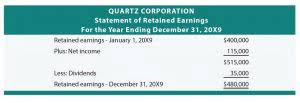
Some of the motives behind repurchasing its shares are when management thinks that shares are undervalued or when employees of the company want to exercise stock options. For the current year, the company has earned a profit of $10,000 (net profit) and decided to pay $2000 in dividends. So the ending retained earnings for the year will be equal to $108,000 ($100,000 + ($10,000 – $2000)). There are six types of equity accounts attributed to corporations which are discussed in more detail below. Whether you buy shares of a publicly traded company like Apple or invest in your cousin’s lemonade stand, you have an equity interest in the business. If your cousin happens to incorporate the lemonade stand business, you’ll own stock in the company.

  • This method uses market data and valuation models to estimate the equity value.
  • They are not static figures but are dynamic, changing with each business transaction and reflecting the company’s ongoing financial activities.
  • This account reflects the earnings that the business accumulates minus the dividend payments made to shareholders.
  • So, you get a loan of $5,000 to add it to what you have and get the needed equipment.

Why diversification across asset classes matters

Client agreements are made with the relevant Saxo entity based on your country of residence and are governed by the applicable laws of that entity’s jurisdiction. All trading and investing comes with risk, including but not limited to the potential to lose your entire invested amount. OneMoneyWay is your passport to seamless global payments, secure transfers, and limitless opportunities for your businesses success.

The accounting approach is primarily concerned with the book value of equity derived from historical cost accounting. This method records assets and liabilities at their original purchase prices, adjusted for depreciation and amortization, resulting in the book value of equity. For the current year, the preferred stockholder will be entitled to receive a total of $40.

Each of these actions requires meticulous accounting to ensure accurate financial reporting and compliance with regulatory standards. Unlike assets and liabilities, equity accounts vary depending on the type of entity. For example, stocks tend to perform well during periods of economic growth, while bonds may provide more stability during downturns. Also, commodities like gold often act as a hedge during inflationary periods. These differences in behaviour mean that combining various asset classes can balance your portfolio’s performance and reduce overall volatility. Relying on a single type of investment can often expose your portfolio to unnecessary risk.

This means that the original company owner would be sharing their ownership with others, who would be known as shareholders. Equity given to the shareholders would be represented as the cash value they would get for those shares, if they are going to sell. The cumulative amount of net income that a company has retained rather than distributed to shareholders as dividends is known as retained earnings. To illustrate these points, consider the example of a multinational corporation that has made significant equity investments in renewable energy.

This method involves analyzing the financial metrics of these transactions and applying them to the target company to estimate its value. Brand equity represents the value premium a company generates from a product with a recognizable name compared to a generic equivalent. Companies create brand equity through marketing strategies that increase awareness and loyalty. Additional paid-in capital can be reduced when a company repurchases its shares.

The cost of capital is the rate of return that could be earned on an investment of similar risk. This method helps assess the profitability and potential return of the investment by considering the time value of the money. By retaining these earnings, a company can allocate funds toward expanding its infrastructure, research and development, or acquiring new assets.

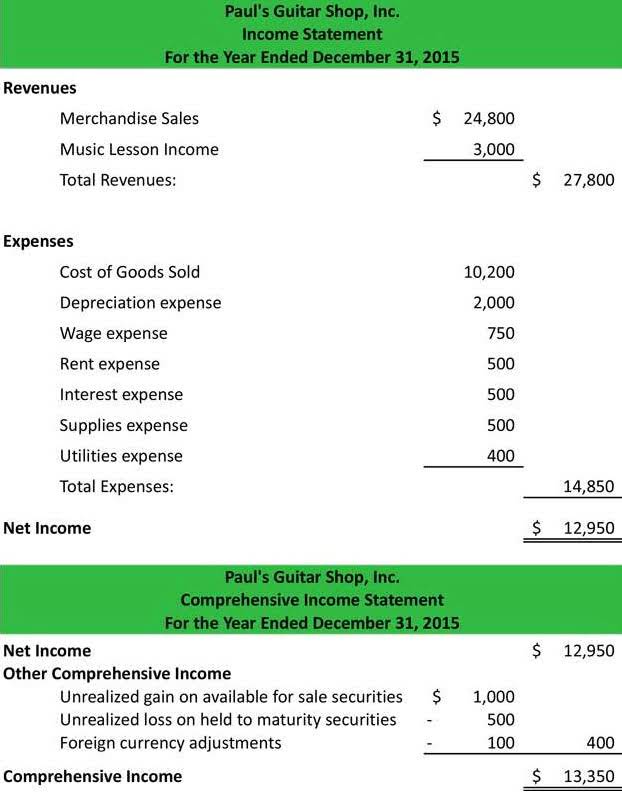
Other comprehensive income is excluded from net income on the income statement because it consists of income that has not been realized yet. For example, unrealized gains or losses on securities that have not yet been sold are reflected in other comprehensive income. Once the securities are sold, then the realized gain/loss is moved into net income on the income statement.

For example, there may be a “preferred stock” account and an “additional paid-in capital – preferred stock” account. Understanding equity accounts is essential for anyone involved in the financial aspects of a business, from the small business owner to the corporate accountant. These accounts can provide insights into the financial strength and potential growth of a company.

Categorías
Bookkeeping

Miscellaneous Expenses

other miscellaneous service cost

Miscellaneous expenses are all expenditures that don’t fit into any other category. They can include various costs, such as travel expenses, consulting fees, and advertising costs. By knowing what “miscellaneous expenses” mean in accounting, businesses can better make accurate budgets for their operations and ensure that every expense is properly accounted for. Business owners should take the necessary steps to track these miscellaneous expenses for more accurate financial reporting.

other miscellaneous service cost

How do you calculate miscellaneous expenses?

  • This helps QuickBooks to automatically determine the entries that should go to the 1099-NEC.
  • Companies need to prioritise expenses and control any unnecessary spending to reduce miscellaneous expenses.
  • Travel expenses for business aren’t typically considered miscellaneous expenses.
  • Businesses need to see these costs more clearly so that they can manage their money better.
  • The cost for this repair doesn’t fit neatly into any of your existing categories, so you might classify this as a miscellaneous expense.
  • Most importantly, all employees must know what the term means and be able to explain it to report their related costs correctly.

Under US GAAP, research and development costs are recorded as an expense in the accounting period in which they are incurred. As with the cost of rent, the portion of electricity and power expense relating to production and sales activities needs to presented in the cost of sales and selling expenses. In this case, you’ll have to create a new account to track the separate payments.

  • Keep track of fees you pay for consultants as well as fees for services from outside professionals who advise you on business matters.
  • Qualifications for deducting some expenses are complicated, and some expenses may need to be amortized or depreciated over time rather than being deducted as expenses in a single year.
  • Even if a purchase isn’t categorized as a miscellaneous expense in the end, it’s still important for your accountant to have a clear paper trail of all transactions.
  • They often cover a broad range of small, seemingly random costs that don’t fit into specific categories.
  • Specific types of income and expenses will warrant dedicated ledgers, such as a sales ledger and utility ledger for incoming and outgoing expenditures.
  • Any business expense that isn’t deductible can’t be included as a miscellaneous business expense.

How Are Miscellaneous Expenses Calculated and Reported

A tech startup has budgeted meticulously for its operations, including employee salaries, rent, and software subscriptions. However, one morning they discover a leak in the office ceiling after a heavy rainstorm, leading to unexpected repair costs. This expense, not being a regular occurrence nor fitting into their standard budget categories, is classified as a miscellaneous expense. Tools and supplies refer to items that are necessary for the operation of your services, like small tool expenses, can be categorized as miscellaneous expenses. Typically, tools with a lifespan of one year or less and that are worth less than $200 would fall under this category.

Job Search Costs

other miscellaneous service cost

A provision for doubtful debts is necessary to account for any non-payments that are not yet obvious but can be reasonably expected. When calculating the cost of goods sold for a manufacturing business, we need to take into account the cost of all inputs used in the production process. If you’re in the business of selling products and/or services, you can also group similar items together and create sub-categories to stay organised.

#1 – What is the Chart of Accounts?

  • In those cases, you deduct the miscellaneous expense from your revenue before calculating your taxable income.
  • But it’s important to know that miscellaneous expenses are not personal expenses and need to be kept track of separately when filing taxes or managing the finances of a business.
  • These legal fees and court costs are deductible directly from gross income on Schedule 1 (Form 1040).
  • Miscellaneous expenses are often misunderstood because they can be made up of so many different things.
  • Keep track of fees you pay for consultants and services from outside professionals who advise you on business matters, because those miscellaneous expenses are tax deductible.

This will display the vendors with insufficient payment amounts to require 1099. If you’re still not sure which category to choose, ask your accountant for help. If you don’t have an accountant, we can help find an accountant or bookkeeper near you. Request a demo of BILL today to see how it can help you automate expense reporting and mitigate the risk of overspending. With BILL Spend & Expense, you can have more control over your budgets and gain visibility into transactions as they occur. It might go without saying, but you should collect and retain receipts for all purchases made with company funds.

Tools and Supplies

You can write off some clothing as miscellaneous deductions if they’re used exclusively for work, like job uniforms, costumes, or steel-toed boots. For example, if you’re working as a carpenter and wear jeans to work, these cannot be claimed on your Accounting for Marketing Agencies taxes, but your safety gear and reflective clothing can. Periodic publications and subscription services such as business journals or industry-related courses fall under this miscellaneous category.

other miscellaneous service cost

NEC mapping

This is particularly relevant when a business mistakenly receives income that is later required to be returned. Taxation expense includes any income tax, capital gains tax, and property tax due on the taxable assets fixed assets and transactions of a business. Usually, the cost of hiring external professionals is charged as an expense in the accounting period in which the related services are acquired.

other miscellaneous service cost

Company

other miscellaneous service cost

A tax professional can help you make the call – you can find one in our advisor directory. You may deduct costs for dues to professional organizations and any memberships that you can show are necessary to conduct your business. You may not deduct dues for personal or hobby clubs or groups, dues or memberships paid to country clubs, or dues for other recreational or social groups. Generally, computer purchases do not miscellaneous expenses examples fall into the miscellaneous category of expenses, as they’re considered assets and depreciated if they’re above a certain value. Miscellaneous expenses can be tax-deductible if they are ordinary and necessary, helping to reduce taxable income.

Categorías
Bookkeeping

The Ultimate Guide to Post-Closing Trial Balance in Finance

By verifying balances, it minimizes the risk of errors in financial statements and ensures compliance with accounting standards. Another frequent mistake involves the incorrect adjustment of balances. Errors can arise when accountants fail to accurately update the balances of permanent accounts. Such inaccuracies can lead to discrepancies in financial reports, potentially resulting in flawed decision-making by stakeholders.

A post-closing trial balance acts as a financial checkpoint for internal or external audits. Auditors use it to verify that your records are complete and accounts are correctly classified. The post-closing trial balance ensures the ledger is balanced, all temporary accounts are closed, and sets the stage for the next accounting period. Overall, the post-closing trial balance is an important tool for verifying the accuracy of the financial statements and for ensuring that the accounting records are complete and in balance. It helps to identify any errors or omissions and provides a starting point for the next accounting period.

Stay on top of your finances with a reliable post-closing trial balance

Its purpose is to test the equality between debits and credits after adjusting entries are prepared. Unlike the unadjusted or adjusted trial balances, the post-closing trial balance includes only permanent accounts, such as assets, liabilities, and equity accounts. Temporary accounts, which are reset to zero at the end of each period, do not appear on this trial balance.

A post-closing trial balance is a financial report prepared after closing entries have been made in the accounting cycle. It lists all the accounts and their balances, ensuring that total debits equal total credits and that the ledger is ready for the next accounting period. A post-closing trial balance follows a structured format that ensures all permanent accounts, like the assets, liabilities, and equity, are correctly recorded before the next accounting period begins. This helps confirm that total debits and credits are balanced, reducing the risk of errors in future financial reports.

Step 2: Record closing entries

  • A post-closing trial balance is a financial report that lists all the accounts with their updated balances after the closing entries have been made at the end of an accounting period.
  • Overall, the post-closing trial balance is an essential part of the accounting process that ensures the accuracy and completeness of a company’s financial records.
  • You may also want to see if any numbers have been transposed or entered in the wrong column, such as a debit entry inadvertently posted as a credit.

This often occurs due to oversight or misclassification during the ledger review process. Ensuring all accounts are properly categorized and included is fundamental to producing a reliable post-closing trial balance. In the first and second closing entries, the balances of Service Revenue and the various expense accounts were actually transferred to Income Summary, which is a temporary account. The Income Summary account would have a credit balance of 1,060 (9,850 credit in the first entry and 8,790 debit in the second). While all of the adjusting entries for ABC Business are reflected in the adjusted trial balance, we still need to do some closing entries before running the post-closing trial balance.

This report serves as a final check to confirm that the accounting system is balanced, and it provides a foundation for starting the next period’s transactions. By understanding and preparing a post-closing trial balance, businesses can maintain financial integrity and readiness for reporting. Once all adjusting entries have been recorded, the result is the adjusted trial balance. This one contains entries pertaining to account reconciliation adjustments, depreciation entries, and charges of prepaid expenses to expense. The accountant may prepare a series of adjusted trial balances, making a number of adjusting entries before closing the books for the month. This version contains the ending balances of all accounts in the general ledger, before any adjustments have been made to them with adjusting entries.

Closing Entries and Their Impact on Financial Statements

A post-closing trial balance is, as the term suggests, prepared after closing entries are recorded and posted. It is the third (and last) trial balance prepared in the accounting cycle. The unadjusted trial balance is the first trial balance that you’ll prepare, and it should be completed after all entries for the accounting period have been completed. Doing so ensures that the company’s financial statements accurately reflect the financial position of the company.

Hire An Accountant At The Most Affordable Prices

The post-closing trial balance serves as a foundation for preparing the financial statements, particularly the balance sheet and the statement of retained earnings. Knowing the difference between temporary and permanent accounts helps in understanding their roles in accounting. Permanent accounts carry forward their balances, crucial for financial analysis and assessing a company’s worth. At the end of the day, the post-closing trial balance proves a company’s financial steadiness.

Shaun Conrad is a Certified Public Accountant and CPA exam expert with a passion for teaching. After almost a decade of experience in public accounting, he created MyAccountingCourse.com to help people learn accounting & finance, pass the CPA exam, and start their career. South Africa’s 2025 budget brings VAT increases and new business opportunities. Learn what it means for you with 5 steps to protect and grow your profits. With less manual effort, you save time, maintain accuracy, and can focus on growing your business instead of sifting through numbers. Our mission is to empower readers with the most factual and reliable financial information possible to help them make informed decisions for their individual needs.

The different types of trial balance reports

  • A post-closing trial balance is a financial report prepared at the end of an accounting period to ensure that all temporary accounts have been closed and the company’s books are balanced.
  • All such information is provided solely for convenience purposes only and all users thereof should be guided accordingly.
  • Doing so ensures that the company’s financial statements accurately reflect the financial position of the company.
  • Once your adjusted trial balance has been completed, you’re ready to record post-closing entries for the month.
  • There are three main types of trial balance reports that you can run, with each trial balance run during a specific part of the accounting cycle.

Thus, the post-closing trial balance shows the company’s financial health accurately. In this example, the total debits equal the total credits, indicating that the ledger is balanced and the post-closing trial balance is accurate. Since temporary accounts are already closed at this point, the post-closing trial balance will not include income, expense, and withdrawal accounts. It will only include balance sheet accounts, a.k.a. real or permanent accounts. As businesses continue to evolve and grow, maintaining accurate and reliable financial records remains a critical component of sound financial management.

How Should a Post-Closing Trial Balance be Prepared?

This important step ensures retained earnings on the books match those reported. CFOs and groups like the FASB depend on them to make big financial choices about profits and earnings. Finally, when the new accounting period is about to begin, you would run the post-closing trial balance, which reflects your totals going forward into the new accounting period.

Please do not copy, reproduce, modify, distribute or disburse without express consent from Sage.This article and related content is provided as a general guidance for informational purposes only. Accordingly, Sage does not provide advice per the information included. This the purpose of the post-closing trial balance is article and related content is not a substitute for the guidance of a lawyer (and especially for questions related to GDPR), tax, or compliance professional. When in doubt, please consult your lawyer tax, or compliance professional for counsel.

This transition underscores the importance of accuracy in financial records, as any oversight during the pre-closing phase can affect the integrity of financial statements. A post-closing trial balance is the final step, created after closing entries are made. Unlike the previous two, it only includes permanent accounts since all revenue and expense accounts have been reset to zero. This confirms that the books are balanced and ready for the next accounting period. The post-closing trial balance lists all the accounts in the general ledger that have balances, including asset, liability, equity, revenue, and expense accounts. The post-closing trial balance is a critical step in the accounting cycle, ensuring the accuracy and completeness of financial statements and preparing the books for the next accounting period.

Categorías
Bookkeeping

2025 Etsy Bookkeeping: A Simple Guide

Etsy Accounting Guide

Say, however, that you waited until today to send out the wedding decorations invoice, and your customer has not yet paid. This income would remain off your records until the customer pays and the transaction clears. EcomBalance is a monthly bookkeeping service that takes bookkeeping off your plate and delivers accurate financials on your Etsy business by the 15th of each month. Etsy accountants turn your data into insights, guiding you on how to grow and manage your shop’s finances effectively. However, it doesn’t give you a full ledger account picture of your shop’s financial health. The first step in bookkeeping is figuring out what information you need to track.

How to make multi-channel accounting highly accurate, compliant and effective

For income tax, Etsy sellers report net income on tax returns, typically using Schedule C for sole proprietors in the U.S. This involves calculating total revenue and deducting allowable business expenses. Meeting thresholds for estimated tax payments is also important to avoid penalties. While free shipping can attract customers, Bookkeeping for Chiropractors sellers must ensure these costs are offset, potentially through product pricing.

  • For example, are you looking to increase overall sales, boost your shop’s visibility, or tap into a new customer segment?
  • Not sure where to start with accounting and bookkeeping for your Etsy shop?
  • Tracking deductible expenses, like home office costs or business travel, can reduce taxable income.
  • You don’t have to update your sales tax settings in your shop for orders shipped to these states and territories.
  • This is a report showing every deposit made by Etsy into your bank account.

What does Etsy Accounting Involve?

To simplify bookkeeping processes and improve accuracy, it’s recommended to explore automated Etsy accounting software, designed with Etsy sellers in mind, like Xero or QuickBooks. Additionally, organizing receipts and invoices will make it easier to track expenses and ensure that you claim all eligible deductions when filing taxes. With proper organization and tracking of sales data, you can stay on top of your financial records and make informed business decisions for growth. Automated accounting software simplifies tax filing by keeping accurate records throughout the year. With all transactions automatically categorized and stored, you can easily generate tax reports and file returns when tax season rolls around. This also ensures that your records are audit-ready, reducing stress and potential issues with tax authorities.

Etsy Accounting Guide

How to Outsource Bookkeeping (+ When and Why It Makes Sense)

It’s essential to understand the taxes you owe and accurately report your earnings and expenses when filing the tax return with the IRS. It makes it easy to track expenses, keep reminders for late pay, customize invoices, and more — saving you time and helping you stay organized. Keep your backups on an external hard drive, or consider cloud-based accounting solutions like Link My Books. Most business owners prefer cloud-based solutions for maximum security and access to data anywhere.

How EcomBalance Can Help With Your Etsy Bookkeeping?

Etsy Accounting Guide

Bizarrely, this is not always the net of the above 2 columns but is the amount of the sale less the processing fee. Any tax that is collected by Etsy and retained by them to be paid over to the tax authorities  is excluded for this. If tax has been charged to a customer and that tax bookkeeping for etsy sellers is held by Etsy to be paid to the authorities on your behalf then this tax should be excluded from your sales number. This gives you the figures what you need for recording your Sales and Fees.

Top 5 Etsy Accounting Software in 2025

It helps you create accurate financial reports, track profits, and prepare for an easy tax filing season. Accurate categorization of Etsy transactions in QuickBooks is essential for proper bookkeeping, tax compliance, and financial reporting. Every sale, fee, and refund must be assigned to the correct account to ensure that your records match reality. Wave Accounting is a free, easy-to-use software that helps over 2 million small business owners in the US and Canada manage their finances.

Etsy Accounting Guide

Setting Up a Chart of Accounts

Once you’ve entered the data into your system, it’s important to track your profits and losses. This can be done through your accounting software or by tallying up your total income and expenses against your total sales figures. You can then calculate your profits and losses based on those figures, or you can use tax calculations to determine any taxes that may need to be paid. Shipping expenses vary based on package weight, dimensions, destination, and carrier.